The Mirror in the Stall
I’ve worn a lot of hats — vineyard manager, property developer, daughter, sister, wife, and executor of estates. I’ve been a negotiator with contractors, a translator for Spanish-speaking crews, and a mediator between family members who stopped speaking decades ago. I’ve sat in boardrooms and driven Porsches down Highway 99 and Jeeps through flooded creek crossings. I’ve worn Chanel and Carhartt covered in dust and vineyard mud.
But somewhere along the way, the person underneath all those hats got… misplaced. Not lost, exactly. Just buried under the weight of being whoever the situation demanded.
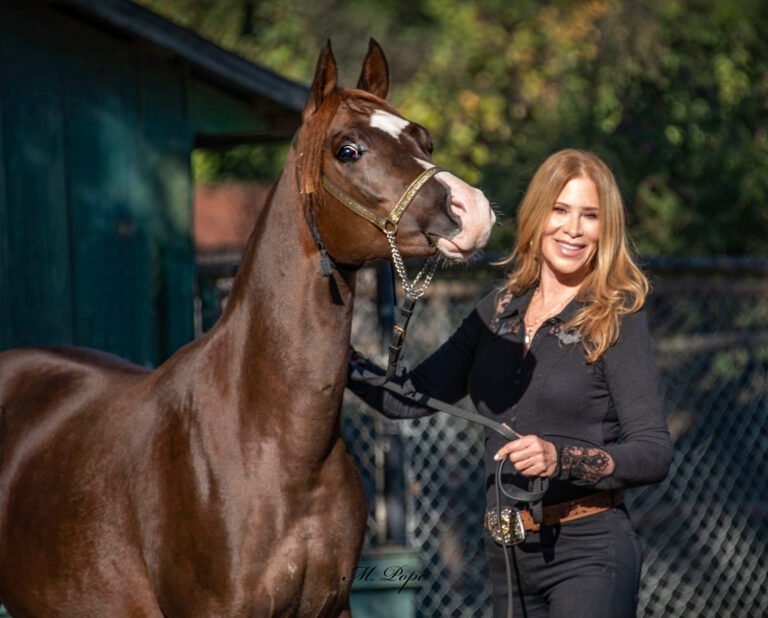
Then there’s Amir.
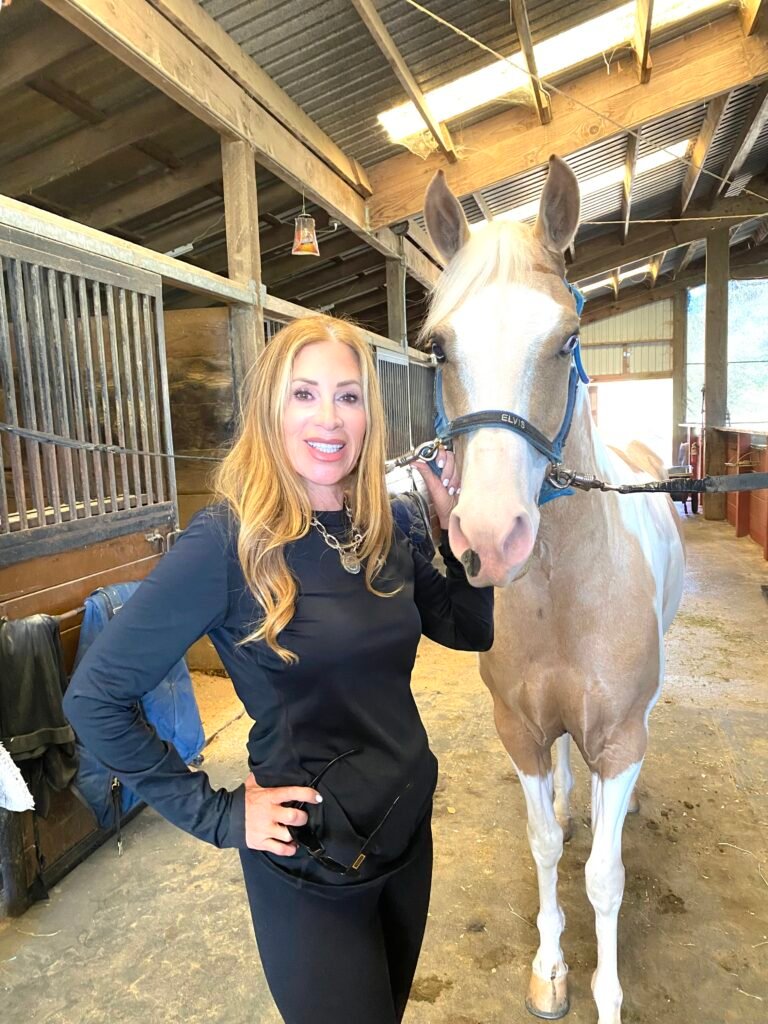
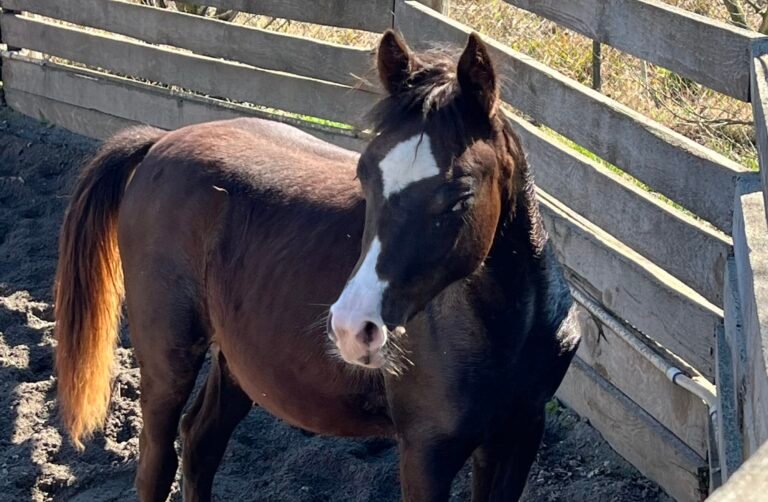
Amir doesn’t care about my title search on the 140 acres. He doesn’t care that I once negotiated a Williamson Act contract that took three years. He doesn’t care about the CPA’s depreciation schedules, the data center feasibility study, or the mediation session next Tuesday. He cares about one thing: who shows up at his paddock right now.
Horses are the only creatures I know that refuse to meet your resume. They meet your nervous system. Your breath. The tension in your shoulders that you thought you hid. The grief you swallowed at 7 a.m. so you could function at 8 a.m. They read the truth of you in the space between your heartbeat and theirs.
I’ve watched grown men — CEOs, contractors, men who negotiate million-dollar deals — dissolve into tears in a round pen because a 1,000-pound prey animal simply would not be lied to. The horse didn’t judge them; it just reflected them. And in that reflection, they met themselves for the first time in decades.
The Arabian horses know this better than most. Something in that ancient blood, in that lineage — the Bedouin trusted their lives to these horses, slept beside them, breathed the same air — carries a radar for authenticity that feels almost spiritual. Amir’s pedigree reads like a poem: Ansata Ibn Halima, Ruminaja Ali, Bask, Mussasa, Fajur, Khemosabe… all powerhouse names.
But the power isn’t in the paper. It’s in the presence.
When I walk to his paddock after a day of being everyone else’s answer, Amir raises his head. His nostrils flare. He smells the cortisol. He hears the lie in my “I’m fine.” And he waits, not with judgment but with invitation.
“Come back,” the invitation says. “I’m still here. The real you is still here. Let’s find her together.”
The grooming ritual becomes confession without words. The quiet moments leaning against his shoulder, listening to the sounds and rhythm of his heartbeat and breathing, become the only therapy that ever actually worked.
Psychologists call it co-regulation. Neurobiologists call it limbic resonance. The Bedouin would have called it amanah — trust, faithfulness, the covenant between horse and human.
I call it grace.
—
The Question That Stays
You spend forty years building a self that survives the world.
The horse asks you to dismantle it — board by board — until only the soul remains.
And the terrifying, beautiful truth?
You built the wrong self. The horse knew all along. He was just waiting for you to get brave enough to let him show you.